

In memoriam
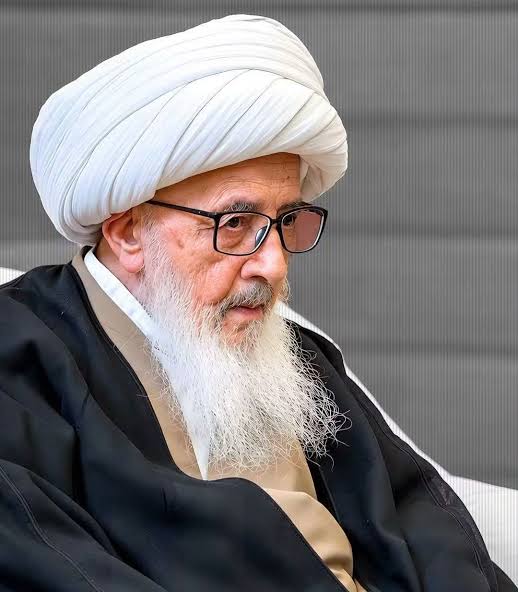
Remembering Ayatollah Waḥīd Khurāsānī
Stories from those who knew him: the young preacher who held a bazaar spellbound, the scholar torn between the minbar and the lesson, and the marjaʿ who walked barefoot for Lady Fāṭima (ʿa).
إِذَا مَاتَ الْمُؤْمِنُ الْفَقِيهُ ثُلِمَ فِي الْإِسْلَامِ ثُلْمَةٌ لَا يَسُدُّهَا شَيْءٌ
“When a believing jurist dies, a breach is made in Islam that nothing can fill.”
Imam al-Ṣādiq (ʿa) · al-Kulaynī, al-Kāfī, vol. 1, p. 38On Tuesday, 17 November 2026, Grand Ayatollah Shaykh Ḥusayn Waḥīd Khurāsānī departed this world in Qom, aged 105. For the ḥawza, his passing is more than the loss of an eminent marjaʿ and jurist. A voice that had sounded for decades in its classrooms and mourning assemblies has fallen silent. Generations of students gathered to hear his intricate discussions of fiqh and uṣūl, jurisprudence and its principles. Countless others knew him through a minbar from which commentary on the Qur’an could turn, almost without warning, into tears for the Ahl al-Bayt (ʿa).
When a scholar of such standing passes away, it is tempting to measure his life in books, years of teaching and numbers of students. All of these matter. Yet the testimonies now circulating from those who knew him preserve something less easily measured: a slight young preacher who could hold an entire bazaar spellbound; a scholar who feared that success in the pulpit might cost him his studies; a teacher who insisted that becoming a real human being was harder than becoming a cleric; and an aged marjaʿ who could walk barefoot in mourning for Lady Fāṭima al-Zahrāʾ (ʿa). Together, these recollections offer a portrait of a man in whom learning and devotion were never far apart.
The young man whose words filled the room
Shaykh Ḥusayn was born in 1921 in Khurāsān; biographical accounts differ on whether his birthplace was Nīshāpūr or Mashhad. His father, Shaykh Ismāʿīl, was himself a scholar and preacher. Long before the son’s name was associated with the great lessons of Qom, it was associated with the art of preaching. One recollection describes the young Shaykh as small and lightly built, so unassuming in appearance that his command of speech came as a surprise.1
Few stories capture that surprise better than a memory of Dr. Mahdī Muḥaqqiq. His father, the preacher Ḥājj Muḥaqqiq, usually addressed the first ten nights of Muḥarram at the Azerbaijani mosque in Tehran’s bazaar, also known as the mosque of Āqā Shaykh ʿAbd al-Ḥusayn. One year, when illness kept him from attending, the trustees asked him to choose his own replacement. He chose the youthful Shaykh Ḥusayn. His son, who knew the famous preachers his father could have sent, could scarcely believe it.
On the first night, Dr. Muḥaqqiq went with the visitor to the mosque. The trustees kept their reservations to themselves. Then the young preacher mounted the minbar, recited the opening khuṭba and took up a verse the reciter had just read. For an hour he spoke with such learning and eloquence that the atmosphere changed. When the sermon ended, the very men who had doubted the choice crowded around Dr. Muḥaqqiq and asked him to kiss his father’s hand and thank him for the preacher he had sent.2
His audiences were not merely impressed by beautiful speech. Sayyid Aḥmad Dāʿī Yazdī remembered an evening at the Khalaf-Bāgh ḥusayniyya in Yazd when he counted seventeen mujtahids, jurists qualified to derive the law for themselves, sitting beneath Shaykh Waḥīd’s minbar. Among them were Ayatollah Ṣadūqī and Sayyid Rūḥ Allāh Khātamī. Their presence was a tribute to the preacher’s intellectual reach. Dāʿī also recalled remarkable gatherings in Kuwait, where the crowds on Tāsūʿāʾ and ʿĀshūrāʾ were said to fill Istiqlāl Street until traffic had to be stopped.3
Yet the measure of a sermon is sometimes found not in the crowd but in a single listener. According to an account transmitted by the late Shaykh Murtaḍā Wāʿiẓī from Ayatollah Tabrīzī, a man in Tehran who had strayed from the religious path once passed a mosque, heard a preacher’s voice and went inside. He stayed to listen, and the sermon changed the direction of his life. Only later was the preacher identified as Shaykh Waḥīd.
A fuller recollection concerns Sayyid ʿAlī-Akbar Khwānsārī, a street peddler in Tehran so devoted to Shaykh Waḥīd’s sermons that he followed him from one gathering to the next. When Shaykh Waḥīd noticed the man’s attachment, he asked about his circumstances. Khwānsārī explained that he earned his living selling goods by the roadside.
At the end of one gathering, Shaykh Waḥīd was presented with an envelope containing a monetary gift. Without even opening it, he handed the whole envelope to the peddler and told him: “This belongs to Imam al-Ḥusayn (ʿa). Put it into your business; it carries blessing.” Khwānsārī used the money to expand his trade. In time he was able to rent a shop, then to buy one. His business kept prospering until, according to the account, he owned orchards and other properties. One day he said to Shaykh Waḥīd: “Ḥājj Āqā, all of this belongs to you. Come and make use of it.”
Khwānsārī also recalled a remarkable measure of the devotion those sermons inspired. When Shaykh Waḥīd preached in Kuwait, Khwānsārī and a group of bazaar merchants, about eighty people in all, would fly there after sunset, attend the sermon and return to Iran by air. Such was the attachment of his listeners that they would travel to another country for a single evening at his minbar.4
An account reproduced in al-ʿAyn al-Ḥulwa preserves another side of his mastery of the minbar. Shaykh Waḥīd once explained at home that after returning from Najaf he did not wish to depend on religious dues (wujūh sharʿiyya) for his livelihood, and so made commentary on the Qur’an the basis of his sermons. Before he spoke, a reciter would read verses of the Qur’an, with no prior agreement about the selection. Shaykh Waḥīd would then take up those very verses and expound them without preparation. Some listeners suspected that reciter and preacher had arranged the verses beforehand; when they put the matter to the test, they found that the exposition really was spontaneous.5
Between the minbar and the lesson
The gifts that made him a sought-after preacher also created his deepest dilemma. In Najaf, the possibilities of the minbar competed with the demands of sustained study. His years there brought him into the circle of Ayatollah Sayyid Abū al-Qāsim al-Khūʾī, with whom, he later told his students, he studied for twenty-three years. He taught the intermediate texts and went on to teach advanced fiqh and uṣūl.6
Ayatollah al-Khūʾī worried that the demands and renown of the minbar might overshadow the young scholar’s academic promise. Other recollections report that Shaykh Waḥīd confided to al-Khūʾī that he could not do justice to both his preaching and his lessons; no one else, he said, knew of this dilemma.7
A story preserved by Shaykh Ḥusayn Ghayb-Ghulāmī, relating the account of Shaykh Muḥammad Ākhūndī, describes what happened next. Shaykh Waḥīd decided to undertake a forty-day devotional retreat, sometimes called a chilla, at Masjid al-Sahla, a mosque associated with the Twelfth Imam (ʿaj). This came after his first Fāṭimiyya lectures at the house of Sayyid Iṣfahānī: when the houses of other marājiʿ invited him for a second, he declined, saying he was not in Najaf, and people assumed he was in Karbala or Kuwait. One night Shaykh Muḥammad al-Kūfī came to the mosque for tahajjud, the night vigil, and found Shaykh Waḥīd leaning against a pillar, absorbed in worship.
Surprised to see him, Shaykh al-Kūfī asked: “What are you doing here? Everyone in Najaf thinks you are in Kuwait.” Shaykh Waḥīd answered that he was keeping a forty-day retreat. Shaykh al-Kūfī then told him that, in an encounter with the Twelfth Imam (ʿaj) which he said he had been granted, he had been instructed to convey this message: “Continue going to the minbar, and continue your studies as well. Wherever you face difficulty, we will help you.” When Shaykh Waḥīd later recounted the episode, he remarked that it was from then that his scholarly studies truly began to flourish.
This was not merely a tale repeated by admirers. Sayyid Bāqir al-Mūsawī al-Durcheʾī, his student for thirty-two years, wrote that he had personally asked his teacher about the incident on two occasions, and that Shaykh Waḥīd confirmed receiving a message through Shaykh al-Kūfī. Sayyid Ḥusayn Hāshimī-nizhād likewise reported asking him privately about its substance and receiving confirmation.8
His subsequent life suggests, at least, that the tension was resolved in practice. Muḥarram and Ṣafar remained seasons of preaching; the rest of the year belonged chiefly to study, teaching and scholarship. Years later, as a marjaʿ, he could still turn an advanced lesson into an assembly of mourning with a single rawḍa, a recitation of the sufferings of the Ahl al-Bayt (ʿa). The minbar had not disappeared from the classroom.
The scholar who made a home in Qom
Having studied and taught in Najaf, he returned to Iran in the early 1970s. Ayatollah Sayyid Muḥammad-Hādī Mīlānī wanted him to teach in Mashhad and invited him personally. Shaykh Waḥīd later remembered seeing the elder scholar climb the stairs to visit his rented home. Mīlānī told him that the glory of the shrine of Imam al-Riḍā (ʿa) lay not merely in its golden dome but in a ḥawza worthy of it, and asked him to help raise the scholarly standing of Khurāsān. Shaykh Waḥīd said that he accepted without debate.
A more difficult memory followed. When arrangements were made for an official visit connected with the Shah’s presence in Mashhad, Shaykh Waḥīd resisted being drawn into it; he related that the affair eventually contributed to his decision to move to Qom.9 In another recollection of the Shah’s time, Dāʿī Yazdī reports that Shaykh Waḥīd’s Qur’anic sermons on Sūrat al-ʿAnkabūt and Sūrat al-Naḥl drew the attention of SAVAK, the secret police, and led to a temporary suspension of his preaching.10
Mashhad had already offered a glimpse of what was to come. Dāʿī remembered meeting more than two hundred students leaving one of his lessons there. In Qom, that scale grew enormously. His classes in Masjid al-Aʿẓam were celebrated for rigorous argument, lucidity and the extraordinary numbers they attracted. Sayyid Durcheʾī believed his was among the greatest lessons the seminaries had witnessed in a century. It produced not only jurists but teachers who went on to form generations of students of their own.11
His intellectual formation had been broader than jurisprudence. In a 2014 lesson on tafsīr (commentary on the Qur’an), he recalled studying philosophy for years under Mīrzā Mahdī Āshtiyānī and Mīrzā Abū al-Qāsim Ilāhī, because he had loved the subject from the beginning. Yet, he added, he eventually came to see the Book and the Sunna as containing what he truly sought. A fellow student remembered his earlier teaching of Mullā Hādī Sabzawārī’s Sharḥ al-Manẓūma in Tehran, when he enlivened logic and philosophy with verses of the Qur’an, reports from the Ahl al-Bayt (ʿa) and poetry. These memories complicate any simple picture of a scholar indifferent to philosophical reasoning: he had known its attraction intimately, even as he came to emphasise other sources of guidance.12
What it meant to be a scholar
The esteem of his students did not rest on intellectual brilliance alone. Shaykh Muḥammad Mūsā Ḥaydar al-ʿĀmilī, who attended his lessons in fiqh, uṣūl and tafsīr for ten years, remembers how often his teacher spoke of Ayatollah al-Khūʾī. Recalling twenty-three years seated humbly before al-Khūʾī’s teaching, he would cite the saying, “Whoever taught me one letter, I became his servant,” and ask how many thousands of times over he must therefore be that great man’s servant. Now, after Ayatollah Waḥīd’s passing, Shaykh Ḥaydar finds himself repeating the sentiment about his own teacher.13
Two of Ayatollah Waḥīd’s Persian sayings remained especially vivid in his memory. The first was Mullā-yi ḥisābī bāshīd: be a serious scholar, a cleric who gives a proper account of himself. As Shaykh Ḥaydar explains it, a scholar’s distinction lies not in the turban, the vocabulary or the quantity of memorised knowledge, but in the ability to answer before God for every word and action. The second was still more searching:
“It is easy to become a cleric; it is very hard to become a human being.”
Ayatollah Waḥīd Khurāsānī · Mullā shudan āsān ast; ādam shudan khaylī sakht ast
Mastery of debate and legal reasoning, on this understanding, is no substitute for humility and the discipline of the soul.14
Smaller recollections make the same point without explanation. Shaykh Riḍā Mukhtārī recalls one such moment. In 1368 SH (1989) he published a critical edition of Munyat al-Murīd, al-Shahīd al-Thānī’s classic work on the etiquette of teacher and student, and in 1369 SH it was named book of the year in the Islamic Republic. One morning, as Ayatollah Waḥīd walked into Masjid al-Aʿẓam, Mukhtārī handed him a copy.
The next morning, on the way to the lesson, Ayatollah Waḥīd asked whether he had been the one who gave him the book, thanked him warmly and said that, since the Two Martyrs were blessed in their lives and works, if he revived their works his life would be blessed. The Two Martyrs (al-Shahīdayn) are al-Shahīd al-Awwal, Muḥammad ibn Makkī al-ʿĀmilī (d. 1384), and al-Shahīd al-Thānī, Zayn al-Dīn al-ʿĀmilī (d. 1558), two great Shīʿī jurists of Jabal ʿĀmil in Lebanon, both put to death for their faith.
In the lesson, Ayatollah Waḥīd then told a story, which was recorded, of someone who reached the presence of the Imam of the Age (ʿaj), who said: because the Two Martyrs did not taste the sweetness and richness of this world, we have blessed their works. He repeated the story often in his lessons, and told Mukhtārī once more that God would bless his life.15
A statement circulated in seminary channels shows another side of his outlook. The independence of the ḥawza, he is quoted as saying, consists in having none above it but God and the Imam of the Age (ʿaj). Religious authority should never become an excuse for pride: the marājiʿ, like all human beings, are mortal, and the funds entrusted to them are for the service of the Imam and his students.16
A life given to Lady Fāṭima (ʿa)
If one devotion threads through nearly every testimony, it is his attachment to Lady Fāṭima al-Zahrāʾ (ʿa). It animated his sermons as a young preacher, shaped his later teaching and found public expression in his determination to revive the Fāṭimiyya, the days of mourning for her martyrdom.
In a tafsīr lesson on 26 Jumādā al-Ūlā 1441 AH (January 2020), he said that Fāṭima is the hidden jewel of existence and the treasured pearl of creation, beyond the grasp of any knowledge or understanding. He recalled the saying of Imam al-Ṣādiq (ʿa) that she was called Fāṭima because creation was weaned from knowing her: none knows her but God, and she knew God. إِنَّمَا سُمِّيَتْ فَاطِمَةَ لِأَنَّ الْخَلْقَ فُطِمُوا عَنْ مَعْرِفَتِهَا “She was named Fāṭima only because creation was weaned from knowing her.”
The duty of these days, he said, is to pay the reward of the Message (ajr al-risāla), the affection for the Prophet’s kin that the Qur’an makes the Prophet’s only request. قُل لَّا أَسْأَلُكُمْ عَلَيْهِ أَجْرًا إِلَّا الْمَوَدَّةَ فِي الْقُرْبَىٰ “Say, ‘I ask of you no reward for it except love for my near kin.’”
The day of her calamity, he continued, is the day of the calamity of the Messenger of God ﷺ, so mourning for her is mourning for the Seal of the Prophets ﷺ himself. All the processions (mawākib) should go out, so that the Prophet’s right is fulfilled and their names are written in the register of the Fourteen Infallibles. Whoever wants Lady Fāṭima to reward him at the hour of death, when the soul reaches the throat, should give himself to the service of these days. The processions should go out to console the Commander of the Faithful (ʿa), the Infallible Imams and the Imam of the Age (ʿaj), and he himself would go too, kissing their feet, in the hope that sinners like him might be entered in that register.17
Sayyid Durcheʾī describes one procession in which Ayatollah Waḥīd walked barefoot on hot asphalt, surrounded by scholars, seminarians and ordinary mourners. He also preserves a sentence that may say more about the priorities of this major marjaʿ than many pages of biography:
“May my entire marjaʿiyya be sacrificed for Lady Fāṭima and the Fāṭimiyya.”
Ayatollah Waḥīd Khurāsānī, as recalled by Sayyid Durcheʾī
Ayatollah Waḥīd would often say that, among his many works, the revival of these commemorations was what he especially hoped would count in his favour on the Day of Resurrection.18
Dāʿī Yazdī tells, in Ayatollah Waḥīd’s own words, how Iran’s public holiday for her martyrdom came about. When Sayyid Muḥammad Khātamī became president, he visited Ayatollah Waḥīd at home, accompanied by a film crew. Ayatollah Waḥīd refused to be filmed, saying he had something private to say. He took the president into a room and spoke for half an hour about Lady Fāṭima, her station and the wrongs done to her. Khātamī wept until his eyes filled and his face turned red. Ayatollah Waḥīd asked that the day of her martyrdom become an official holiday, and Khātamī agreed.19
The Imam of the Age and an enduring absence
The other abiding presence in his life, according to those closest to him, was the Imam of the Age, Imam al-Mahdī (ʿaj). Shaykh Ḥaydar remembers his teacher urging believers not to let the ghayba, the Occultation, become forgetfulness. He spoke often of the Imam, encouraged prayers for the hastening of the faraj (the relief of his reappearance), and reminded students that loyalty must shape their conduct as well as their devotional language. Sayyid Durcheʾī likewise recalls his recommendation to recite Sūrat Yā Sīn and dedicate its reward to the Imam; on Wednesdays, he taught its tafsīr to his students.20
Five lessons he leaves behind
Read together, the testimonies of those who knew him return to five lessons.
Be ready to give an account of yourself.
A scholar’s distinction lies not in the turban or the vocabulary, but in being able to answer before God for every word and action.
Work at becoming a human being.
Becoming a cleric is easy; becoming a human being is very hard. Debate and legal reasoning are no substitute for humility and the discipline of the soul.
Honour those who taught you.
Whoever teaches you one letter has made you his servant. After twenty-three years with al-Khūʾī, he counted himself that servant many thousands of times over.
Give yourself to the service of Lady Fāṭima (ʿa).
Mourning for her is mourning for the Prophet ﷺ. Among his many works, the revival of the Fāṭimiyya was what he especially hoped would count in his favour on the Day of Resurrection.
Do not let the Occultation become forgetfulness.
Pray for the Imam’s reappearance, and let loyalty to him shape your conduct as well as your words.
May God envelop Shaykh Ḥusayn Waḥīd Khurāsānī in His mercy, raise him with Muḥammad and the family of Muḥammad ﷺ, and grant patience to his family, his students and the ḥawza that has lost one of its most recognisable voices.
His seat is empty. What he taught, and what he made others love, need not be.
Learn from the sources he loved
Ayatollah Waḥīd came to find what he truly sought in the Book and the Sunna. Tasneem’s courses open those sources to learners in English, at their own pace. Begin with God and His Attributes, the first course in Level 1.
Sources
Zindagīnāma wa Khadamāt-i ʿIlmī wa Farhangī-yi Ustād Ḥājj Shaykh ʿAbbās-ʿAlī Muḥaqqiq Wāʿiẓ Khurāsānī, pp. 10–11; Mafākhirnāma, p. 219. ↑ 1
Ayatollah al-ʿAlawī al-Burūjirdī, interview recounting Dr. Mahdī Muḥaqqiq’s testimony, as transmitted by Ayatollah al-Kifāʾī, Telegram. ↑ 2
Sayyid Aḥmad Dāʿī Yazdī, Wāʿiẓ-i Shahr-i Mā, pp. 47, 85. ↑ 3
Shaykh Murtaḍā Wāʿiẓī, reporting Ayatollah Tabrīzī’s recollection; and the account of Sayyid ʿAlī-Akbar Khwānsārī, al-ʿAyn al-Ḥulwa: Chashma-yi Shīrīn, pp. 311–313. ↑ 4
al-ʿAyn al-Ḥulwa: Chashma-yi Shīrīn, pp. 311–313. ↑ 5
Shaykh Muḥammad Mūsā Ḥaydar al-ʿĀmilī, “Fī Wadāʿ Shaykhī wa-Ustādhī,” personal remembrance, Telegram, 17 November 2026. ↑ 6
ʿAlī Dawānī, Naqd-i ʿUmr, vol. 1, pp. 113–114. ↑ 7
Shaykh Ḥusayn Ghayb-Ghulāmī, reporting Shaykh Muḥammad Ākhūndī, Chirāgh-i Muṭālaʿa on Telegram; Sayyid Bāqir al-Mūsawī al-Durcheʾī, Telegram; Sayyid Ḥusayn Hāshimī-nizhād, Telegram. Other reports transmit the message through Shaykh Riḍā Tawḥīdī (Telegram), or word it as an instruction to pursue his studies, promising the Imam’s care; they also differ over where and when the message was delivered. ↑ 8
Majmūʿa-yi Muṣāḥiba-hā Darbāra-yi Āyatullāh al-ʿUẓmā Mīlānī, pp. 30–32. ↑ 9
Sayyid Aḥmad Dāʿī Yazdī, Wāʿiẓ-i Shahr-i Mā, pp. 92–94. ↑ 10
Sayyid Bāqir al-Mūsawī al-Durcheʾī, condolence message, Telegram. ↑ 11
Ayatollah Waḥīd, tafsīr lesson, 10 Bahman 1392 SH (30 January 2014), Nardibān-i Fiqāhat on Telegram; Mafākhirnāma, pp. 177–178. ↑ 12
Shaykh Muḥammad Mūsā Ḥaydar al-ʿĀmilī, “Fī Wadāʿ Shaykhī wa-Ustādhī,” Telegram, 17 November 2026. ↑ 13
Shaykh Muḥammad Mūsā Ḥaydar al-ʿĀmilī, the same remembrance. ↑ 14
Shaykh Riḍā Mukhtārī, recollection in Jāmiʿ-i ʿIlm wa ʿAmal (1405 SH). ↑ 15
Ayatollah Waḥīd, remarks on the independence of the ḥawza, Nardibān-i Fiqāhat on Telegram. ↑ 16
Ayatollah Waḥīd, tafsīr lesson, 26 Jumādā al-Ūlā 1441 AH, al-Uṣūl channel on Telegram. ↑ 17
Sayyid Bāqir al-Mūsawī al-Durcheʾī, condolence testimony, Telegram, 17 November 2026. ↑ 18
Sayyid Aḥmad Dāʿī Yazdī, Wāʿiẓ-i Shahr-i Mā, pp. 97–99. ↑ 19
Shaykh Muḥammad Mūsā Ḥaydar al-ʿĀmilī, Telegram; Sayyid Bāqir al-Mūsawī al-Durcheʾī, Telegram. ↑ 20